The Hog Report / Daily Dispatch
Mid-2026 Hiring Trends: AI Efficiency vs. Skills-Based Reality
Discover the latest 2026 hiring trends. Learn how AI recruitment tools and the reality of skills-based hiring impact your resume strategy today.
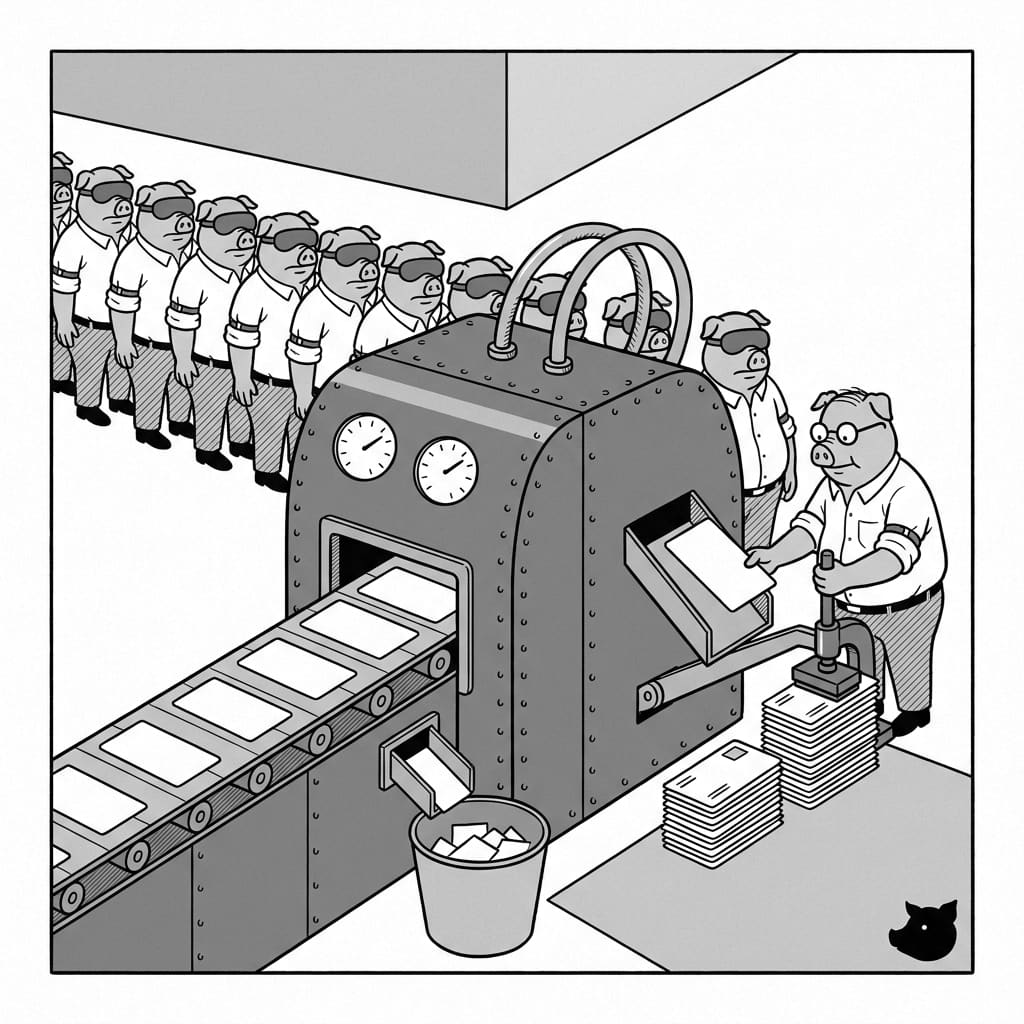
Mid-2026 Hiring Trends: Separating Fact from Fiction
The job market has shifted dramatically this year, and if you are using the same job search playbook from two years ago, you are likely hitting a brick wall. We are seeing a massive evolution in how recruiters find talent, screen resumes, and make final decisions. To succeed today, job seekers need to understand what is happening behind the scenes in human resources departments across the country.
Today, we are diving deep into the latest mid-2026 hiring trends. We will look at how artificial intelligence has officially moved from an experimental tool to a standard operational necessity. More importantly, we will unpack the ongoing shift toward skills-based hiring, separating corporate hype from the reality of how you actually get hired.
Artificial Intelligence is the New HR Standard
For the past few years, the recruitment industry has been buzzing about the potential of artificial intelligence. In 2026, that potential has become a concrete reality. Recruiters are no longer just testing AI chatbots or automated sourcing tools, they are integrating them deeply into their daily workflows to manage overwhelming application volumes.
The numbers paint a clear picture of this technological shift. According to a 2026 SHRM report, 43% of organizations now use AI in their HR tasks, representing a massive jump from just 26% in 2024. This rapid adoption is driven by one primary factor: pure efficiency.
When you apply for a job today, there is a very high probability that an algorithm is the first entity to review your credentials. Human resources teams are relying on these systems to accelerate their pipelines. In fact, according to Workable's AI in Hiring Survey, 44.2% of recruiters report a significant acceleration in the hiring process directly due to AI integration. For job seekers, this means your resume formatting and keyword optimization are more critical than ever. If your resume cannot be parsed accurately by an Applicant Tracking System (ATS), human eyes might never see it.
The Skills-Based Hiring Paradox
If you have spent any time on professional networking platforms recently, you have undoubtedly heard about "skills-based hiring." Corporate press releases have spent the last two years declaring the death of the traditional four-year college degree requirement. Companies claim they only care about what you can actually do, not where you went to school.
However, the actual data tells a much more complicated story. A comprehensive 2026 analysis reported by The Interview Guys, which synthesized data from Harvard Business School and The Burning Glass Institute, reveals a startling reality check. While 85% of employers now claim to prioritize skills over degrees, only about 0.14% of actual hires are impacted by the formal removal of degree requirements.
This is what we call the skills-based hiring paradox. Employers desperately want to hire for specific competencies, but their legacy systems and internal biases often default to traditional educational credentials when push comes to shove. This does not mean you should ignore your skills, but it does mean you cannot rely on corporate promises alone. You must explicitly connect your practical abilities to tangible business outcomes.
How Employers Are Actually Screening Candidates Today
Despite the slow progress in fully abandoning degree requirements, the way employers screen early-career professionals is genuinely changing. We are seeing a distinct move away from traditional academic metrics in favor of more holistic competency evaluations.
The National Association of Colleges and Employers (NACE) recently released revealing data on this front. They report that 70% of employers are currently utilizing skills-based hiring practices in 2026, up from 65% the previous year. Even more interesting is the sharp decline in traditional academic filtering. According to the same NACE report, the practice of screening candidates by GPA has plummeted to just 42% of employers, down from 73% in 2019.
This data proves that while a degree might still serve as a baseline filter for many organizations, your academic grades are mattering less and less. Employers want to see evidence of problem-solving, technical proficiency, and adaptability. They are building interview rubrics specifically designed to test these real-world competencies rather than academic memorization.
Actionable Steps to Adapt Your Job Search Strategy
Understanding these 2026 hiring trends is only half the battle. You need to adapt your application strategy to align with the new reality of AI-driven, skills-focused recruitment.
- Optimize for the AI Screener: Because a massive percentage of companies are using AI to parse resumes, you must use standard, recognizable job titles and clear, chronological formatting. Avoid overly creative layouts that might confuse an automated parsing tool.
- Front-Load Your Competencies: Do not bury your most valuable skills at the bottom of your resume. Create a robust "Core Competencies" section right below your professional summary. Align these exact terms with the keywords found in the specific job description you are targeting.
- Provide Proof, Not Just Buzzwords: Since companies are prioritizing skills but struggling to verify them, you must provide context. Instead of just listing "Project Management," detail a specific instance where you led a cross-functional team to deliver a project under budget.
Keeping up with the constant shifts in Applicant Tracking Systems and AI algorithms can feel like a full-time job in itself. This is exactly why we built ResumeHog. Our platform helps you tailor your application to match specific job descriptions in seconds, ensuring you get past the automated screeners and into the hands of a human recruiter.
The job market in late 2026 requires precision, adaptability, and a clear understanding of the tools employers are using against you. By mastering these trends and adjusting your approach, you can navigate the automated hiring landscape and land the role you deserve.