
The Hog Report / Daily Dispatch
Autofill, Auto-Apply or Manual Tailoring?
Discover the practical differences between application autofill tools, auto-apply bots, and resume tailoring to decide which fits your 2026 job search.
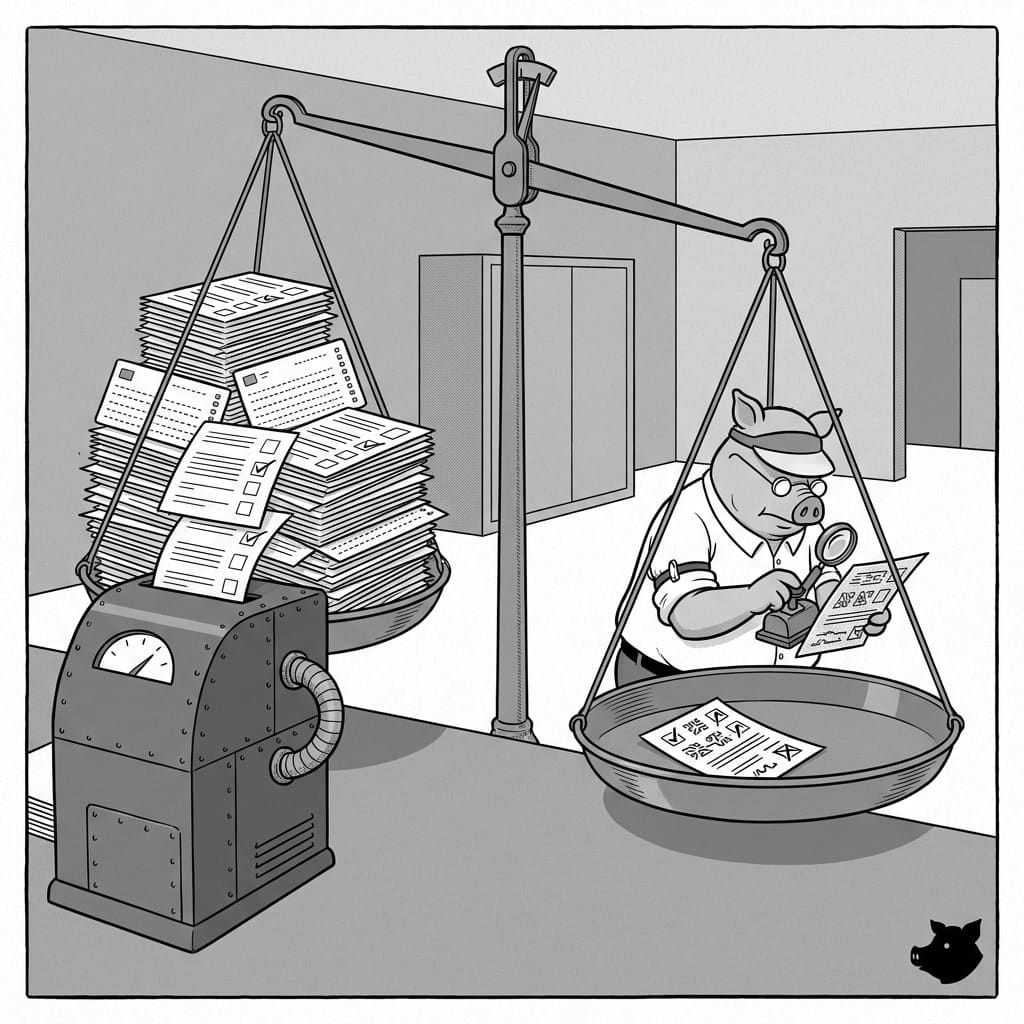
The New Application Workflow
If you are frustrated by typing your work history into repetitive forms, you are not alone. The 2026 job search technology stack offers several ways to speed up the process. However, job seekers often confuse three distinct approaches: application autofill, auto-apply bots, and manual resume tailoring. Understanding the practical differences between these methods is critical for deciding when each makes sense.
Auto-Apply Bots: The Volume Approach
Auto-apply bots take full control of the submission process. Tools in this category are designed to submit hundreds of applications on your behalf while you step away from the keyboard. For example, LazyApply promises to automatically apply to thousands of jobs in a single click on platforms like LinkedIn and Indeed.
The primary advantage here is raw volume. If your only goal is to get your resume in front of as many employers as possible, a bot can do that faster than any human. However, the tradeoff is significant. Because the bot submits the application without a final human review, you risk sending inconsistent answers to specific screening questions. Employers often use targeted knockout questions, and a bot applying generic responses might result in automatic rejection.
When it makes sense: Auto-apply tools are best suited for candidates who view the job hunt strictly as a numbers game and do not mind a lower response rate in exchange for maximum outreach.
Application Autofill: The Speed and Review Balance
Autofill tools do not apply for you. Instead, they act as a browser assistant that pastes your saved data into the correct fields. Simplify Copilot, a popular free extension, autofills job application questions with one click and automatically tracks your submissions in a central dashboard.
The practical difference here is accountability. An autofill tool saves you the frustration of typing out your address and graduation year repeatedly, but it stops short of hitting the submit button. You retain the opportunity to review your answers, adjust a response to a unique screening question, and ensure the data matches the job description.
When it makes sense: Autofill extensions are ideal for your middle tier of job targets. They save significant time on standard forms while keeping you in the driver seat to catch potential errors before submission.
Resume Tailoring: The Precision Strategy
Tailoring involves customizing your resume content specifically for the role you want. It requires analyzing the job description and rewriting your bullet points to highlight the most relevant achievements. According to Indeed, candidates should start every bullet point with a strong action verb and follow up with the business value of that work to show the impact of their experience.
Manual tailoring is the slowest method, but it yields the highest quality application. It proves to the employer that you understand their specific needs. To speed this up, you can use specialized tools. ResumeHog can help tailor a resume to a job description by suggesting relevant adjustments without losing your authentic voice.
When it makes sense: Tailoring is non-negotiable for your top choice jobs. When you find a role that perfectly matches your career goals, precision beats volume every time.