
The Hog Report / Daily Dispatch
Late October 2026 Hiring Trends: The AI Job Gap and Applicant Volume Surge
Discover how AI attrition and a 10,000-job shortfall are driving a massive 'spray and pray' application surge in the Q4 2026 job market.
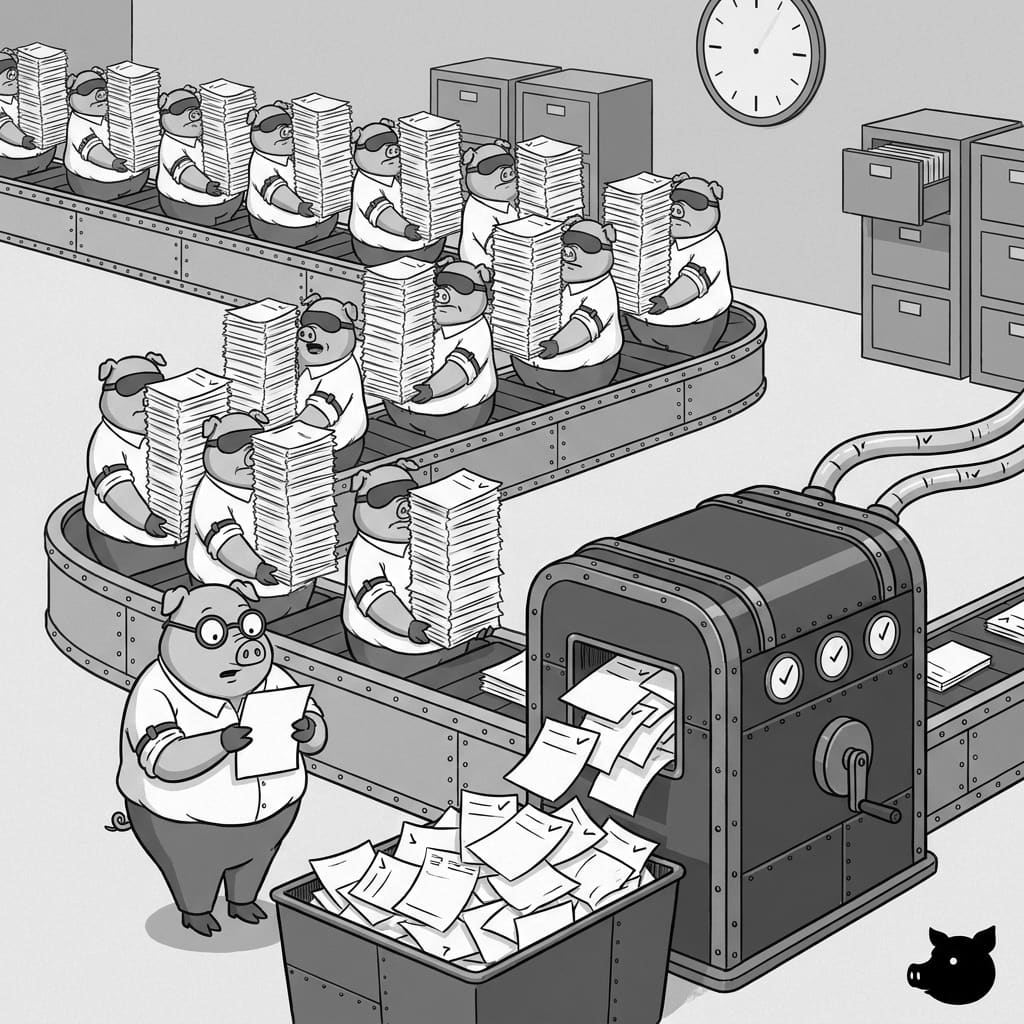
The Quiet Shrinking of the Q4 2026 Labor Market
The late October 2026 job market is presenting a frustrating paradox for professionals. While mass layoffs have largely faded from the headlines, getting hired feels harder than ever. Newly released data reveals a hidden factor: artificial intelligence is quietly suppressing headcount through natural attrition, and anxious job seekers are flooding the market with applications in response.
Instead of dramatic corporate restructuring, companies are simply choosing not to backfill certain roles. This "low-hire" environment has shifted the burden entirely onto candidates, who are facing intense competition for a shrinking pool of open positions.
Goldman Sachs Quantifies the AI Hiring Gap
For months, economists have debated whether AI is actually replacing jobs or simply changing them. A new research note from Goldman Sachs offers a concrete answer. According to an October 22, 2026 analysis reported by shattered.io, Goldman Sachs economist Joseph Briggs found that employment growth in the industries most exposed to AI ran about 10,000 jobs below its long-term trend over the previous three months.
This 10,000-job shortfall represents a quiet, localized freeze rather than a wave of terminations. The trend is corroborated by the federal government's own qualitative data. As noted by BlueLine Research, the Federal Reserve's October 14 Beige Book reported flat hiring nationally. Crucially, five regional Fed districts specifically noted that AI is quietly shrinking headcount through attrition. Employers are letting natural turnover reduce their workforce, replacing departing employees with automated workflows instead of new hires.
The Applicant Reaction: A "Spray and Pray" Surge
Faced with fewer open roles and a frozen market, job seekers are hitting the panic button. According to an October 24, 2026 report by Forbes, traffic to top job boards like Indeed and ZipRecruiter has surged by 10 percent year-over-year. Desperate candidates are adopting a "spray and pray" strategy, submitting massive volumes of applications in hopes of securing a single interview.
This volume surge is driven by historically low market confidence. Forbes notes that a recent Gallup poll found only 28 percent of respondents believe it is a good time to find a quality job. This anxiety has created a vicious cycle: candidates apply to hundreds of roles out of fear, overloading Applicant Tracking Systems (ATS) and forcing recruiters to rely even more heavily on AI screening tools to manage the influx.
How to Adapt Your Q4 Job Search
When millions of generic applications flood the market, participating in the volume game will only guarantee your rejection. To navigate the late 2026 hiring landscape, you must pivot from scale to precision.
- Target Roles with High Attrition Resistance: Avoid applying for generic administrative or entry-level coding roles that are highly exposed to AI automation. Focus your search on positions requiring complex human judgment, cross-functional strategy, or specialized physical trades.
- Prioritize Internal Referrals: With job boards experiencing a 10 percent traffic surge, the front door is jammed. An internal referral bypasses the overloaded ATS entirely, putting your resume directly in front of a hiring manager.
- Tailor with Intent: A spray and pray strategy results in poorly matched applications. Instead of sending out fifty generic resumes a day, send five highly tailored ones. If you need help matching your experience to the exact language of a job description, tools like ResumeHog can help tailor your resume to a job description efficiently without sacrificing quality.
- Highlight Your Own AI Fluency: Since employers are using AI to increase internal productivity, they want candidates who can do the same. Explicitly list the AI tools you use to optimize your own workflows.
The late 2026 job market may be sluggish, but companies are still hiring for critical needs. By understanding the data behind the current slowdown, you can step out of the frantic application line and start submitting resumes that actually command attention.