The Hog Report / Daily Dispatch
August 2026 Hiring Trends: How AI Fatigue is Changing the Job Search
Discover the latest August 2026 hiring trends. We analyze recent BLS data, the rise of recruiter AI fatigue, and how to adapt your resume strategy.
The August 2026 Hiring Landscape
If you are job hunting this summer, you have likely noticed a palpable shift in the market. The days of rapid hiring have settled into a much more cautious, highly competitive environment. For months, professionals have felt the friction of a slowing economy, and recent data confirms these suspicions. According to the Bureau of Labor Statistics, the United States economy saw an unexpected decline of 23,000 nonfarm payroll jobs in July 2026, while the unemployment rate remained relatively steady at 4.1 percent. This dip in payrolls signifies that employers are actively pulling back on expansion plans and becoming incredibly selective about who they bring on board.
For job seekers, this cooling period requires a fundamental shift in strategy. When companies are not hiring in bulk, they take longer to evaluate each candidate. Hiring managers are looking for exact matches rather than generalists who can be trained on the job. Understanding this macroeconomic backdrop is the first step to tailoring a job search that actually works in the second half of the year.
Stagnating Openings Mean Fierce Competition
This cautious corporate approach is further reflected in the latest job openings data. The Bureau of Labor Statistics recently reported that job openings were little changed at 7.4 million in June 2026, while total hires remained completely flat at 5.3 million. What does this stagnation mean for your daily job search? It means the available talent pool is increasingly crowded, and every open requisition is receiving a massive influx of eager applicants.
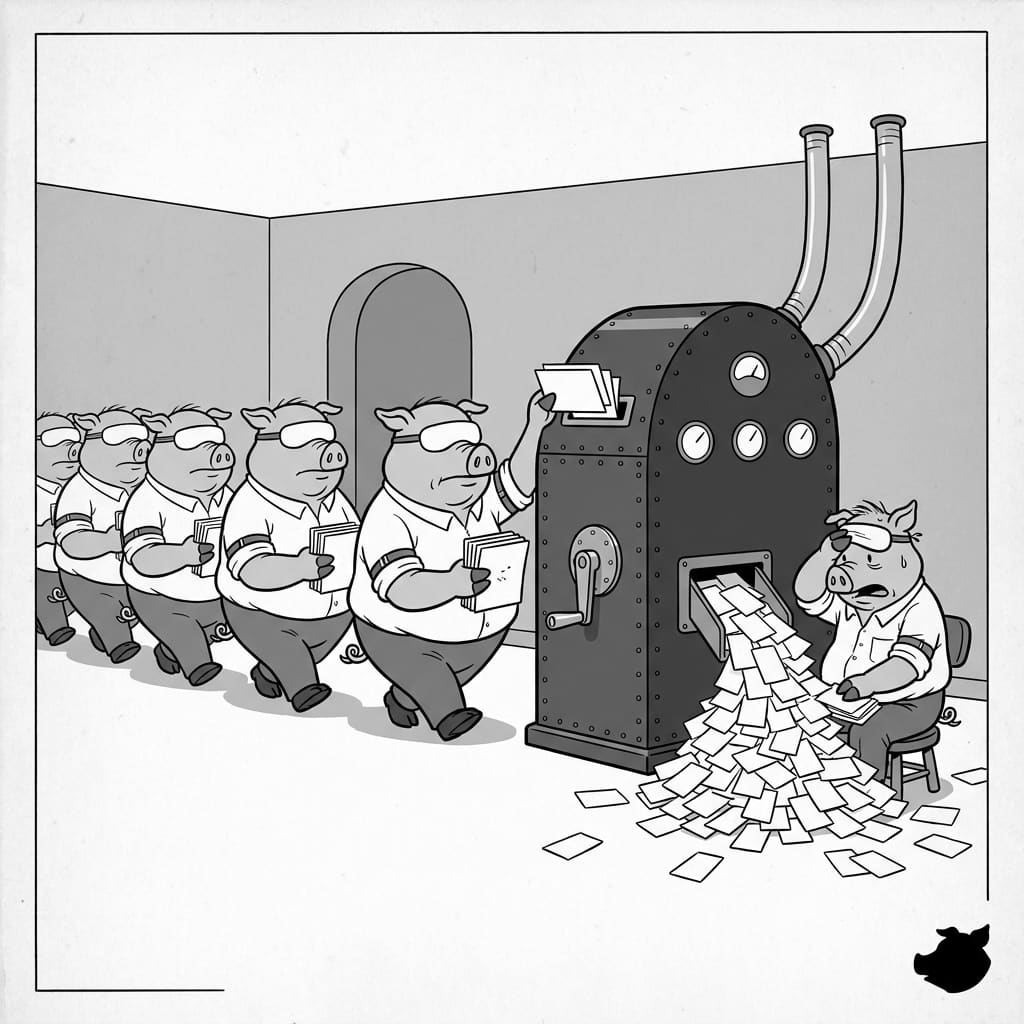
To manage this overwhelming volume of resumes, talent acquisition teams are leaning heavily on Applicant Tracking Systems (ATS) and artificial intelligence screening tools. However, this reliance on technology has created a secondary bottleneck in the hiring pipeline. Candidates are using generative tools to spam job boards with hundreds of applications, forcing recruiters to sift through unprecedented amounts of digital noise. The competition is no longer just about having the best skills; it is about proving your authenticity in a sea of automated applications.
The Hidden Threat to Hiring: AI Brain Fry
While artificial intelligence is supposed to make the recruitment process faster and more efficient, it is having an unintended side effect on the hiring managers and recruiters who operate these systems. A joint study by Boston Consulting Group and the University of California, highlighted in a March 2026 Harvard Business Review article, identified a new workplace phenomenon called "AI Brain Fry." The research found that constantly monitoring and validating AI outputs pushes cognitive limits, leading to a 33 percent increase in decision fatigue and a 39 percent spike in major errors among workers.
For job seekers, this is a critical and actionable insight. Recruiters are genuinely exhausted by the cognitive load of overseeing automated recruitment technology, correcting algorithmic mistakes, and sorting through AI-generated applicant summaries. If your resume is overly complex, stuffed with generic buzzwords, or poorly formatted, a fatigued human recruiter is highly likely to skip it entirely. You are not just trying to beat a machine; you are trying to win over an overworked professional who is suffering from severe digital burnout.
How to Adapt Your Application Strategy
With fewer jobs available and hiring teams facing significant technology fatigue, your application strategy must evolve immediately. The spray-and-pray method of applying to everything will only hurt your chances. Here are several actionable ways to stand out in the current environment:
- Focus on precision, not volume. Stop mass applying to hundreds of jobs. Instead, target specific roles that strongly align with your actual professional experience and core competencies.
- Simplify your formatting. Since recruiters are battling intense decision fatigue, you must make your resume incredibly easy to read. Use clean layouts, standard fonts, and clear bullet points that draw the eye to your biggest achievements.
- Tailor for both algorithms and humans. Your resume needs the right industry keywords to pass the initial applicant tracking system, but it must read naturally for the human reviewer at the end of the line.
- Quantify your impact. Vague statements require recruiters to think harder about your value. Use hard numbers, percentages, and dollar amounts to instantly prove your worth without adding to their cognitive strain.
Leveraging the Right Tools for Success
In a tight, highly filtered market, technology can still be your greatest ally if used correctly. Platforms like ResumeHog help you analyze job descriptions and optimize your resume for applicant tracking systems in a matter of seconds. By doing the heavy lifting of keyword alignment and formatting, ResumeHog allows you to focus your mental energy on crafting authentic, human-centric bullet points that resonate with tired recruiters.
Navigating the August 2026 job market requires a careful balance of calculated strategy and empathy for the hiring teams on the other side of the screen. By understanding the latest economic data and adapting your approach to account for recruiter burnout, you can cut through the digital noise and land your next great role.