
The Hog Report / Career and Education
Resume Building Tips to Stand Out in Skills-Based Hiring
Employers are placing greater attention on what candidates can do, rather than relying solely on degrees or years of experience. This trend has led to
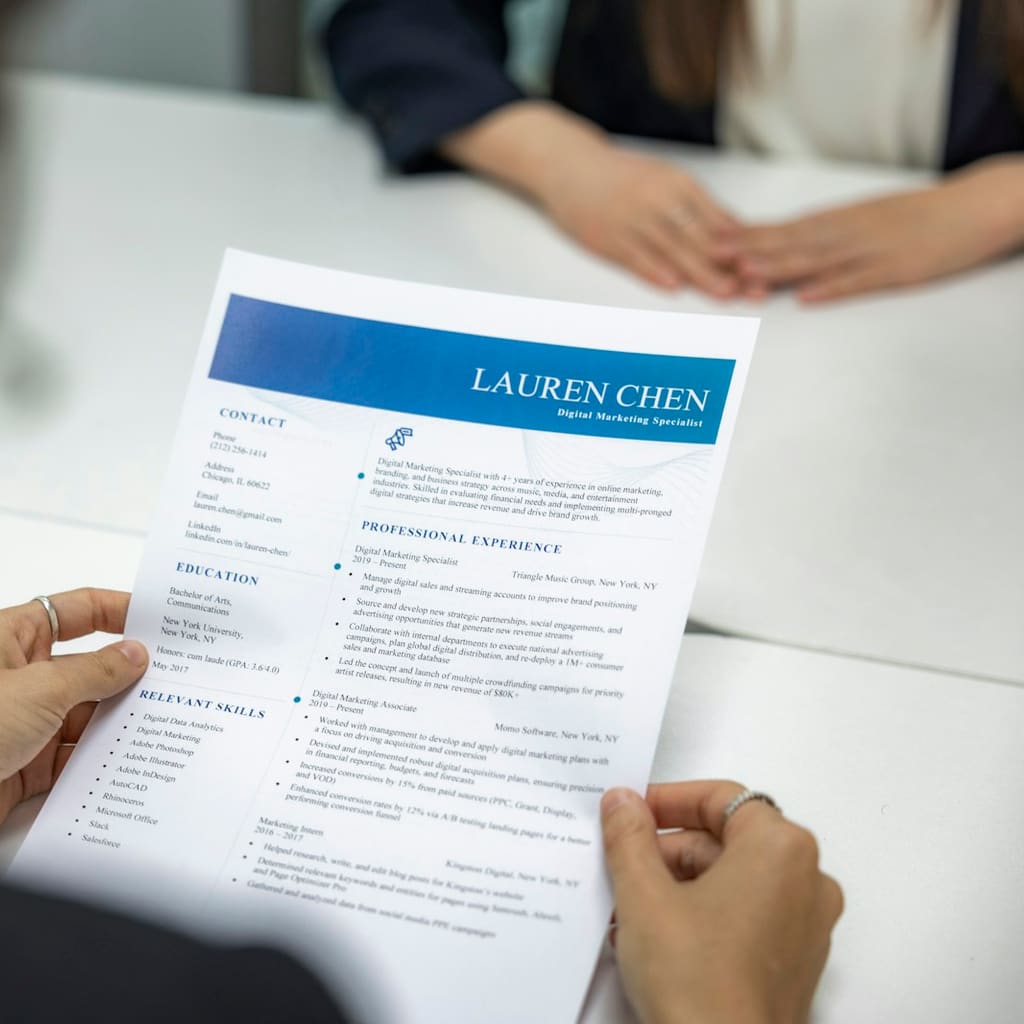
Employers are placing greater attention on what candidates can do, rather than relying solely on degrees or years of experience. This trend has led to skills-based hiring, which has now become a must for the roles that are altered because of artificial intelligence (AI).
“There is an overlooked segment of talent employers are excluding by ignoring the value their experiences and skills bring to the organization. It’s time we use more inclusive and transformative strategies to solve the workforce challenges we all face,” says Celeste Warren, Vice President at Merck.
This change has important implications for job seekers. A resume that simply lists previous positions may fail to convey the value a candidate brings to a new role. A stronger resume connects skills with real examples, measurable outcomes, and the requirements of the position.
A skills-based resume can also help candidates with unconventional career paths. People changing industries or moving into specialized professions can use their resumes to show how their knowledge translates into workplace capabilities. The goal is to make those connections clear from the first few sections of the document.
Why Credentials Alone Won't Cut It Anymore
The World Economic Forum (WEF) notes that skills-based hiring enables employers to recruit candidates for positions that may not yet exist. The WEF’s Future of Jobs Report 2025 estimates that approximately 39% of current skill sets will undergo significant changes or become obsolete by 2030.
As the required skills evolve with the advent of AI and other technologies, relying solely on credentials is risky. Therefore, employers are increasingly looking for people with appropriate skills so they can adapt as roles evolve.
Government hiring practices are moving in a similar direction.
Several U.S. states have eliminated degree requirements for a wide range of public-sector positions, as reported by Forbes. Pennsylvania was among the first to remove degree requirements from most state government jobs.
Therefore, around 85% of hiring managers reportedly expect to see a clearly defined skills section in a resume. Avoid vague statements with phrases like:
- Hard worker
- Team player
- Fast learner
- Good communicator
- People person
Instead, use specific competencies that relate to the position. Depending on the role, this could include:
- Patient communication
- Case documentation
- Data analysis
- Project coordination
- Conflict resolution
Connect Education With Practical Skills
Simply listing a degree tells an employer that you completed a particular academic program. Adding relevant coursework, clinical experience, certifications, or practical training can explain what you learned and how that knowledge can be applied.
This can be particularly useful for people completing graduate education to learn specialized skills. Take, for example, the role of speech-language pathologists, who need skills like active listening, empathy, critical thinking, and more. According to DeSales University, professionals pursuing a master's can hone their skills and knowledge.
Even working professionals can now acquire advanced knowledge and skills through a speech pathology online master's. These online programs offer all coursework online, providing flexibility for those who cannot commit to on-campus degrees.
Graduate-level study in a specialized field can involve research, assessment, communication, documentation, collaboration, and evidence-based practices that translate into workplace skills. That information can give employers a clearer picture of what the candidate has prepared to do. It also helps connect academic preparation with the practical requirements of a position.
Don't Overlook Your Transferable Skills
Career transitions have become increasingly common, making it important for resumes to reflect a broader range of professional experiences.
Research on transferable skills suggests that these abilities can be difficult to develop through traditional training, which adds to their value for employers. Skills such as communication, adaptability, and problem-solving can remain useful across different industries and positions.
A project manager who becomes a freelancer can still apply strong planning and coordination abilities. A teacher who moves into an analyst role can bring valuable skills such as organization, patience, and structured thinking. Clearly identifying these transferable skills can help hiring managers recognize a candidate's suitability, even when previous job titles do not directly match the position.
Look beyond the responsibilities listed under your previous job titles. Consider the skills you developed through projects, volunteer work, training, or other experiences, and identify those that can support your target role.
Choose the Right Skills to List
The growing shortage of qualified workers is one factor contributing to this shift. Data show approximately 8.8 million job openings compared with 6.3 million available workers. This imbalance is encouraging employers to move beyond traditional hiring criteria. Leaders across sectors, from healthcare to nonprofits, now say demonstrated ability matters more than a diploma.
However, not every skill deserves equal space on your resume. Focus on what the specific job actually requires. Robert Half's resume guidance makes a clear distinction between hard skills, such as software expertise, and soft skills, such as communication. Both types of skills are important, but they should be presented in different ways.
Specific hard skills can be listed in a dedicated skills section to make your technical capabilities easy to identify. Soft skills are more effective when demonstrated through concrete examples in your professional experience. As AI becomes more common across industries, experience with AI tools is also emerging as a valuable skill, including for professionals outside the technology sector.
Optimize for Applicant Tracking Systems
Even a well-written resume may need to pass through automated screening software before it reaches a recruiter. Many companies use applicant tracking systems (ATS) to screen applications during the initial stages of hiring.
Indeed's guidance on ATS-friendly resumes recommends using language that closely matches the terminology in the job description. Simple formatting is also important because ATS software can have difficulty reading columns, graphics, and unconventional fonts.
Use familiar section headings such as "Skills" and "Experience" to make your resume easier for the system to process. A clean resume that incorporates relevant keywords can improve your chances of getting your application in front of a recruiter.
Frequently Asked Questions
How long should a skills-based resume be?
A skills-based resume should generally be one to two pages, depending on your experience level. Recent graduates and professionals with limited experience can often present their qualifications on one page. Candidates with extensive experience may need two pages to provide enough relevant detail without overcrowding the document.
Should I include certifications on a skills-based resume?
Yes, certifications can strengthen a skills-based resume when they relate to the position you want. Create a dedicated certifications section if you have several relevant credentials. Include the certification name, issuing organization, and completion or expiration date when applicable. Prioritize credentials that demonstrate current knowledge or specialized expertise.
Should I include volunteer experience on my resume?
Volunteer experience can be valuable when it demonstrates skills relevant to your target position. Leadership, event coordination, mentoring, fundraising, communication, and project management are examples of skills that may be developed through volunteer activities. Include meaningful volunteer roles with descriptions that explain your responsibilities and contributions, particularly if your professional experience is limited.
Key Stats and Facts on Skills-Based Hiring
- Current skill sets expected to change significantly or become outdated by 2030: 39%
- Job openings in the U.S.: 8.8 million
- Available workers in the U.S.: 6.3 million
- Hiring managers reportedly expecting a clearly defined skills section on resumes: 85%
Skills-based hiring puts greater emphasis on demonstrated ability. A resume that simply lists job titles, degrees, and responsibilities may fail to communicate the full value of a candidate. A stronger approach connects qualifications with evidence.
A clean, ATS-friendly structure makes your qualifications easier for automated systems and recruiters to identify. Most importantly, think of your resume as evidence of what you can contribute. When each section supports that message with relevant skills and concrete examples, your resume has a much better chance of making a strong impression.