
The Hog Report / Daily Dispatch
Early November 2026 Hiring Trends: Job Gains and the AI Trust Gap
Discover what the November 2026 jobs report, 7.52 million open roles, and the rising AI candidate fraud crisis mean for your late-year job search.
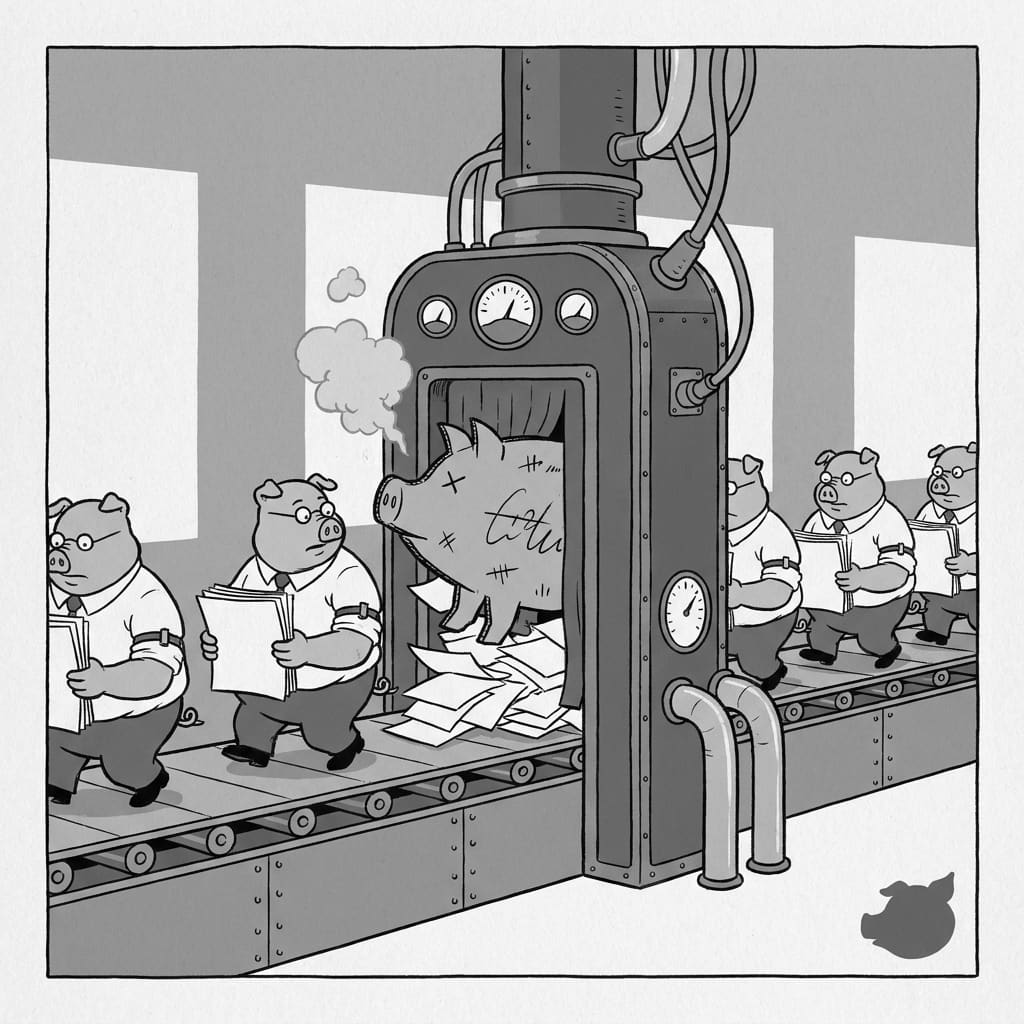
A Surprisingly Strong Labor Market
The early November 2026 job market is full of surprises. While many forecasters predicted a sluggish fourth quarter, recent economic data shows the labor market is actually holding strong. However, job seekers are hitting a completely new kind of wall. They are facing an epidemic of employer skepticism driven by AI-generated applications.
First, let us look at the macro hiring numbers. On November 6, 2026, the latest jobs report covered by CNN revealed that the U.S. economy added a massive 165,000 jobs in October. This figure easily crushed expert expectations. Simultaneously, the national unemployment rate ticked down to 4.1 percent.
This hiring momentum is not an isolated incident. According to a November 3 update, U.S. job openings surged by 333,000 to hit 7.523 million available roles. The numbers prove that companies are still actively looking to hire as we approach the end of the year. The anticipated corporate hiring freeze has not entirely materialized. Instead, the core challenge has shifted from a lack of open jobs to a rigorous and highly skeptical screening process.
The AI Trust Gap and Credibility Crisis
If hiring is so robust, why do candidates still feel like their applications are disappearing into a void? The answer is a growing crisis in applicant credibility.
As job seekers heavily adopt generative artificial intelligence to write resumes and complete technical assessments, recruiters are actively pushing back. An October 2026 report on latest AI recruiting statistics found that 74 percent of job seekers now use AI in their search. Consequently, a staggering 91 percent of recruiters and hiring managers have spotted or suspected candidate deception. The report also highlights that 74 percent of hiring managers are more worried about fake credentials today than they were a year ago.
This fear is fundamentally changing how companies screen resumes. Employers are actively recalibrating their applicant tracking systems to catch automated fraud. Industry experts are currently advising human resources leaders on how to pressure-test hiring processes against candidate misrepresentation. As a result, standard digital applications are facing unprecedented scrutiny, and generic resumes are being tossed out immediately.
How to Prove Your Authenticity
With employers on high alert for bot-generated applications, job seekers must pivot their strategy. Blasting out hundreds of identical resumes is no longer just ineffective; it can actively get your profile flagged as deceptive.
- Quantify Your Impact: Vague bullet points read exactly like AI outputs. Back up your experience with hard numbers, specific project details, and measurable business outcomes.
- Tailor with Care: Customizing your application is critical, but it needs to sound like a real professional. You can use ResumeHog to help tailor a resume to a job description, ensuring it hits the right keywords while keeping your authentic human voice intact.
- Build a Proof of Work Portfolio: Do not just claim you have a technical skill. Provide links to code repositories, live websites, case studies, or published articles that prove your expertise to a skeptical recruiter.
- Leverage Warm Introductions: The easiest way to bypass an algorithmic fraud filter is a direct employee referral. Networking remains the most powerful tool to establish immediate credibility with a hiring manager.
The jobs are out there this November, and companies have the budget to fill them. However, winning these roles now requires proving you are a verified professional with real experience, not just a highly optimized algorithm.