
The Hog Report / Daily Dispatch
Documenting Skills in Late 2026: Focus on Decisions, Not Tasks
Discover how to document your skills in late 2026. Learn why employers want you to prove how your skills drive business decisions, not just list them.
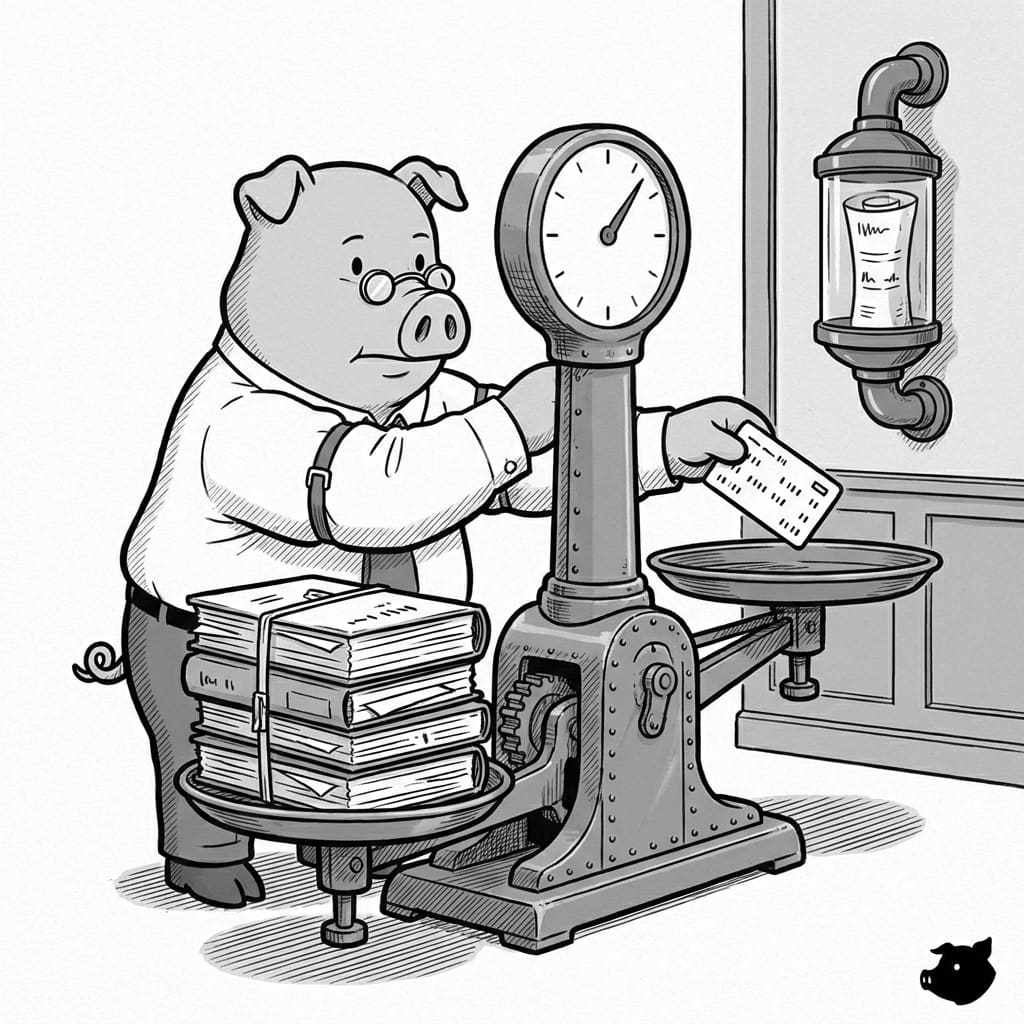
The Shift in 2026: Why Empty Skill Lists Are Failing
If you have updated your resume recently, you have probably added a few modern buzzwords. With 70% of employers now reporting they use skills-based hiring according to the National Association of Colleges and Employers (NACE) Job Outlook 2026 survey, candidates are scrambling to pack their applications with every requested keyword.
But recruiters are catching on to the fluff. As the job market cools in late 2026, hiring managers are no longer impressed by an isolated "Skills" section packed with isolated terms. They want proof.
NACE President and CEO Shawn VanDerziel recently emphasized this exact problem. "It is not enough for candidates to simply list their skills: Employers want to see examples," VanDerziel noted. To successfully transition past the initial screening, you must connect the skills you have sharpened directly to the job you want.
The New Currency: Decisions Over Tasks
As artificial intelligence assumes more routine workflows, the value of human employees is shifting from task execution to strategic judgment. A November 2026 analysis of LinkedIn's Skills on the Rise research highlights a critical new career currency: demonstrating how your skills contribute to business decisions.
The report notes that professionals must "build skills around decisions, not tasks." For example, simply running a data analysis shows technical proficiency. However, interpreting what that data means and recommending a specific course of action proves your value to the company.
When you sit down to write your resume bullet points, evaluate your past requirements through this lens. Instead of writing, "Responsible for analyzing monthly marketing metrics," upgrade it to show the decision: "Analyzed monthly marketing metrics to identify underperforming channels, reallocating $15,000 in budget to high-converting campaigns."
Evaluating the "AI Literacy" Requirement
This decision-first approach is especially vital when documenting technical proficiencies like AI literacy. According to an October 2026 update from LinkedIn, the share of job postings requiring AI literacy skills has jumped roughly 65% over the last 12 months. The payoff is massive: LinkedIn members who list AI literacy are 78% more likely to get hired.
However, throwing "ChatGPT" or "Prompt Engineering" at the bottom of your resume is not enough for a non-technical role. Employers need to know how you use these tools responsibly to make better choices or improve efficiency.
- Weak: "Used generative AI tools to write weekly newsletters."
- Strong: "Leveraged AI drafting tools to accelerate newsletter production by 30%, freeing up time to develop a targeted subscriber retention strategy."
By framing the skill around the resulting business impact (a retention strategy), you prove that you understand the tool's true purpose.
Proving Human Skills in a Tech-Heavy Market
While tech capabilities get the headlines, human skills remain the ultimate differentiator. The NACE Job Outlook 2026 data confirms that employers are actively searching for candidates who can problem-solve and communicate effectively across teams.
If a job description heavily emphasizes "cross-functional collaboration" or "stakeholder communication," do not just add those exact phrases to a skills grid. Embed them into your work history.
Document the specific stakeholders you communicated with and the problems you solved together. For instance, detailing how you "facilitated a cross-functional review between engineering and sales to launch a new product feature two weeks ahead of schedule" provides the concrete evidence hiring managers are looking for.
Practical Takeaway for Your Next Application
When you evaluate a job posting's requirements, pick out the top three mandatory skills. Then, scan your resume to ensure each of those skills is tied to a specific outcome or decision in your bullet points.
If you are struggling to reframe your task-based history into decision-driven achievements, ResumeHog can help. Our tailored formatting tools make it easy to align your documented skills with the specific requirements of the job you want, giving you an edge in the competitive 2026 market.